أفضل الممارسات في تشكيل الفولاذ الساخن للمركبات الصناعية
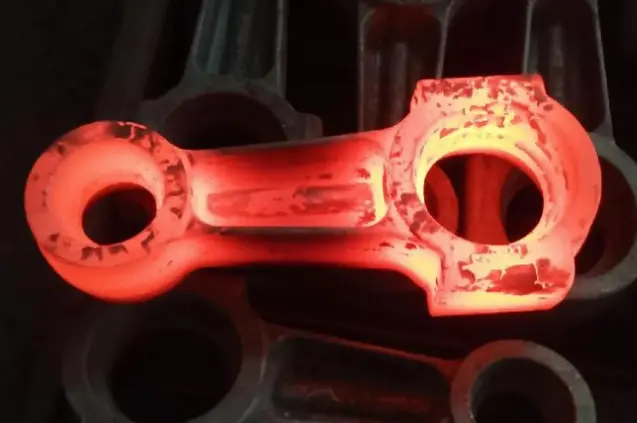
In the construction of industrial vehicles, تزوير ساخن of components that have to bear repetitive mechanical loads, impact, vibration, and rigorous service conditions is commonly utilized. To form the steel, manufacturers heat it to an appropriate temperature before applying the compressive force. This allows them to construct intricate shapes while also reducing the forming load compared to cold forming. This method is quite popular for items like shafts, steering parts, gears, axle parts, brackets, and other load-bearing hardware. The performance of a forged component is not only a function of temperature. The ultimate result is influenced by steel grade, billet condition, heating uniformity, deformation sequence, die design, cooling technique, heat treatment, and machining. For industrial vehicle OEMs and purchasing teams, understanding these linkages is critical in determining whether a forged component is appropriate for a given application and in comparing potential suppliers.
How Hot Forging Works for Industrial Vehicle Components?
Heating Steel to the Appropriate Forging Range
The first step is to heat the steel billet to a temperature range that will provide appropriate plasticity but not so high as to cause severe oxidation, grain growth, or other metallurgical difficulties. Many carbon and alloy steels are forged in the general range of 1,100 to 1,250 °C, although this should not be taken as a universal norm. The suitable range relies on the steel grade, the billet size, the forming procedure, and the microstructure desired.
Uniform heating is especially crucial for large or heavy industrial vehicle components. If the surface is substantially hotter than the core, the billet can be subjected to uneven deformation and undesirable thermal gradients. Overheating can enhance the tendency to produce scale and cause grain growth, and underheating can increase the forming forces and increase the likelihood of surface flaws.
Hence, industrial forging operations tend to control the furnace or induction-heating parameters, according to the material specification and production route, rather than a single temperature value for each component.
Microstructure, Deformation, and Final Properties
The flow stress of steel diminishes with increasing temperature; hence, deformation at high temperatures is easier. Dynamic recovery and recrystallization may take place during deformation depending on the material and forging circumstances. These mechanisms can be used to modify or restore the microstructure and to mitigate the impacts of accumulated strain.
But the ultimate mechanical properties are not governed by the deformation only. The cooling rate of the forging and any subsequent heat treatment can greatly influence the hardness, strength, toughness, and dimensional stability. Parts made of alloy steels such as 4140 or 4340 may require controlled heat treatment to achieve the characteristics specified for their service conditions.
That is an important distinction when assessing a forging provider. A supplier may have good forming competence but poor heat-treatment capability, and therefore the overall manufacturing process still has to be examined for production approval.
Choosing Steel Grades for Industrial Vehicle Forgings
الفولاذ الكربوني والسبائكي
The selection of the material should be based on the real service requirements and not the forging process. Carbon steels are used for parts where you need intermediate strength, machinability, and cost. Increased hardness and strength can be achieved with higher-carbon grades following adequate processing, but account should also be taken of their forming and heat-treatment needs.
Alloy steels are commonly utilized for more heavily loaded components because the alloying elements can improve the hardenability and allow the manufacturer to develop a suitable mix of strength and toughness through heat treatment. 4140 and 4340 are typically linked with demanding mechanical applications. Again, the right grade is dictated by the component specification, not the material name.
Case-hardening steels may also be suitable where a component requires a hard wear-resistant surface together with a harder core. Such material selection is relevant for gears and other parts subjected to repetitive contact pressures.
Matching Material Selection to Service Conditions
An industrial vehicle component manufactured through تزوير ساخن can be subjected to static loads, cyclic fatigue, shock loading, vibration, temperature variations, or abrasive environments. These aspects must be taken into account before deciding on the steel grade and forging route.
For example, a shaft under repetitive torsional loading may need a different mix of strength and toughness than a structural bracket. Some gears may be optimized for surface hardness and fatigue strength, whereas a major suspension part may be optimized for a good compromise between strength, toughness, dimensional stability, and manufacturability.
Material certificates should therefore be considered together with the component drawing, heat-treatment specification, and the mechanical qualities required. Traceability from the original billet through to forging and heat treatment is extremely important where components are employed in safety-essential or substantially loaded applications.
Selecting the Right Forging Process and Equipment
Open-Die and Impression-Die Forging
Open-die forging is suitable for large parts, development work, low-volume production, and situations where flexible shape is more critical than very strict dimensional tolerances. Early-stage development can also benefit from open-die technologies because they typically require less tooling than closed-die production.
Impression-die forging is better suited to the repetitive manufacture of defined geometries. The dies dictate the flow of the heated steel to be formed into the desired shape, which allows producers to obtain more uniform dimensions and reproducible manufacturing outputs. Depending on the part, further machining may be required to meet final tolerances and surface requirements.
Flash and flashless are various ways of utilizing material and controlling dimensions. Under proper conditions flashless forging can reduce waste and machining, but it needs accurate control of the billet volume, die alignment, and process parameters.
Press Capacity Is Only One Part of Equipment Selection
A hot forging press with a high nominal force rating is not automatically suitable for every industrial vehicle component. Engineers should consider the press stroke, die envelope, available energy, forming speed, billet size, handling system, and compatibility with the required forging sequence.
Production equipment also needs to match the expected annual volume. A high-volume component may justify automated billet handling, induction heating, robotic transfer, and dedicated tooling, while a lower-volume component may benefit from a more flexible production setup.
The important question for procurement teams is therefore not simply whether a supplier owns a large press. The more useful question is whether its complete equipment and process route are appropriate for the component being ordered.
Hot Forging Compared with Alternative Manufacturing Routes
Hot, Warm, and Cold Forging
Hot, warm, and cold forging occupy different positions within the manufacturing process. Hot forging uses elevated temperatures to improve material flow and reduce forming forces. It is particularly useful when substantial deformation or relatively complex geometries are required.
Cold forging is performed at or near room temperature and can provide excellent dimensional accuracy and surface finish. However, forming forces are substantially higher, and the amount of deformation that can be achieved depends strongly on the material and process design. Work hardening can also occur during cold forming.
Warm forging operates between conventional cold and hot forging conditions. The exact temperature range varies with the material and application, so a fixed range such as 200°C to 800°C should not be treated as a universal definition. Warm forging can provide a useful compromise between forming load, dimensional control, and material flow for selected components.
الحدادة مقابل الصب
Casting provides considerable freedom for complex external and internal geometries, making it valuable for components where internal passages or highly intricate shapes are required. Forging, in contrast, is often selected where directional material flow, soundness, and mechanical performance under load are major considerations.
تزوير الساخنة does not automatically eliminate every defect associated with cast material. However, controlled plastic deformation can consolidate certain discontinuities and alter the original cast structure. The final result depends on the starting material, forging reduction, temperature history, and subsequent heat treatment.
The appropriate choice therefore depends on the component. A heavily loaded shaft may favor a forged route, while a housing with complex internal cavities may be more practical to cast. Engineers should compare the complete manufacturing process rather than treating one method as universally superior.
Forging Versus Machining from Solid Stock
Machining from bar or billet can achieve tight tolerances and complex geometries without dedicated forging dies. It can therefore be useful for prototypes, small batches, or components with relatively simple material-removal requirements.
For larger production volumes, however, extensive machining can result in substantial material waste and longer cycle times. Forging can bring the starting geometry closer to the final shape, leaving machining primarily for critical surfaces and dimensional features.
A common production route is therefore forging followed by heat treatment and finish machining. This combination allows manufacturers to use forging for the main structural geometry while reserving machining for areas where tight tolerances are required.
Best Practices for Consistent Hot Forging Production
Control Heating, Forming, and Cooling
Temperature management should cover the entire process rather than focusing only on the furnace set point. Billet temperature, transfer time, die temperature, deformation rate, and cooling conditions can all affect the final microstructure and dimensions.
Induction heating can provide rapid and relatively uniform heating for suitable production lines, while furnaces remain widely used for larger batches and different billet geometries. The choice depends on production volume, billet dimensions, material requirements, and available process controls.
Cooling also requires attention. Rapid or uncontrolled cooling may produce a microstructure that differs from the intended specification, while slow cooling can influence hardness and subsequent machining behavior. When heat treatment follows forging, the transition between these stages should be clearly defined in the process documentation.
Design Dies for Controlled Material Flow
Die design has a direct effect on filling, flash formation, tool life, and defect risk. Sharp transitions, inadequate radii, poor parting-line selection, and unsuitable preform geometry can restrict material flow and increase local stresses.
A properly designed preform can distribute material before the final impression is filled. This can reduce excessive die loading and improve consistency between production cycles. Finite element simulation is increasingly used to evaluate material flow, forging loads, temperature distribution, and potential defect locations before physical dies are manufactured.
For high-volume industrial vehicle components, spending more effort on die and preform development during the engineering stage can reduce later production problems and unnecessary tooling modifications.
Prevent Common Forging Defects
Common forging problems include laps, underfilling, cracks, excessive scale, dimensional variation, and die-related defects. Laps can occur when material folds over itself instead of flowing continuously into the die cavity. Poor preform design, unsuitable material distribution, excessive deformation, and improper process control can contribute to this problem.
Cracking may result from inappropriate temperature, excessive deformation, unfavorable stress conditions, or material-specific limitations. Defect prevention therefore requires more than visual inspection. The forging process itself should be reviewed to determine why the defect occurred.
Depending on the component specification, inspection may include dimensional measurement, hardness testing, metallographic examination, magnetic particle testing, ultrasonic testing, or other nondestructive methods. The appropriate inspection plan should be established according to the component's function and applicable specifications.
Automation and Digital Monitoring in Forging Production
مناولة المواد آليًا
Automation can improve repeatability by controlling billet loading, transfer timing, positioning, and removal. In high-volume production, automated handling also reduces variation caused by inconsistent transfer times between heating and forming.
Robotic systems can be integrated with heating equipment, forging presses, trimming operations, and inspection stations. The main value is not simply reducing labor requirements but creating a more consistent process window that can be monitored and adjusted.
Data-Based Process Control
Modern forging lines can collect information such as billet temperature, press force, stroke position, cycle time, die temperature, and equipment condition. When this information is linked to quality records, manufacturers can identify process drift before it results in large quantities of nonconforming components.
Process capability studies can also help determine whether critical dimensions and process variables remain within the required limits. For procurement teams, suppliers that can provide meaningful process records and traceability may offer greater visibility than suppliers that provide only a final inspection report.
خاتمة
تزوير الساخنة remains an important manufacturing route for industrial vehicle components that require a combination of structural strength, toughness, dimensional consistency, and production efficiency. Its advantages depend on much more than heating steel and applying forming force. Material selection, billet preparation, temperature control, die design, deformation sequence, cooling, heat treatment, machining, and inspection all contribute to the final component.
For procurement teams and engineers, the most useful approach is to evaluate the complete manufacturing route rather than judging a supplier by press capacity or certification alone. A qualified forging partner should be able to demonstrate appropriate equipment, material knowledge, process control, traceability, tooling capability, inspection resources, and realistic production capacity. As simulation, automation, sensor-based monitoring, and energy-efficient production continue to develop, these capabilities will become increasingly relevant when industrial vehicle manufacturers select forging processes and build long-term supply partnerships.
الأسئلة الشائعة
1. What temperature ranges are optimal for hot forging industrial vehicle components?
تتراوح درجات الحرارة المثلى للتشكيل على الساخن عادةً بين 1,100 و1,250 درجة مئوية (2,012 و2,282 درجة فهرنهايت)، ولكن هذا يعتمد على نوع الفولاذ ومتطلبات القطعة. بشكل عام، تعمل أنواع الفولاذ الكربوني بكفاءة عالية عند درجات الحرارة المنخفضة ضمن هذا النطاق، بينما قد تحتاج أنواع الفولاذ السبائكي إلى درجات حرارة أعلى لتحقيق الأداء الأمثل. يضمن الحفاظ على نفس درجة حرارة القطعة المعدنية طوال عملية التشكيل ثبات خصائصها ويمنع ظهور عيوب مثل التشققات أو عدم اكتمال التشكيل.
2. How does hot forging compare to casting for industrial vehicle applications?
تتميز عملية التشكيل على الساخن بخصائص ميكانيكية أفضل من الصب، لأنها تُحسّن بنية الحبيبات وتتخلص من عيوب الصب كالثقوب والشوائب. تتمتع الأجزاء المشكلة بالتشكيل بقوة خطية تتوافق مع اتجاهات الإجهاد الرئيسية، مما يجعلها أكثر مقاومة للإجهاد وتدوم لفترة أطول. يُعد التشكيل بالتشكيل أكثر موثوقية للاستخدامات التي تتطلب تحمل أحمال كبيرة، بينما يوفر الصب خيارات تصميم أوسع للأشكال الهندسية الداخلية المعقدة.
3. What kinds of certifications should I look for when selecting a hot forging supplier?
من أهم الشهادات المطلوبة شهادة ISO 9001:2015 لأنظمة إدارة الجودة الأساسية، بالإضافة إلى معايير خاصة بالنشاط التجاري، مثل TS 16949 لقطاع السيارات أو AS9100 لقطع غيار الطائرات. تُظهر هذه الشهادات التزام المورّد بضبط العمليات، والتوثيق، والتطوير المستمر. كما يُنصح بأخذ الشهادات البيئية وآليات موافقة العملاء، التي قد تكون مطلوبة في نشاطك التجاري، بعين الاعتبار.
4. What lead times should I expect for custom hot forging projects?
تختلف فترات التسليم اختلافًا كبيرًا تبعًا لمدى تعقيد القطعة، والحاجة إلى أدوات خاصة، وكمية الإنتاج. قد يستغرق تصنيع القطع البسيطة باستخدام الأدوات الحالية من 4 إلى 6 أسابيع، بينما قد يستغرق تصنيع القطع المعقدة المصممة حسب الطلب والتي تتطلب قالبًا جديدًا من 12 إلى 16 أسبوعًا أو أكثر. عادةً ما تضيف عملية النمذجة الأولية من أسبوعين إلى أربعة أسابيع إلى إجمالي الوقت اللازم، ولكنها طريقة جيدة للتأكد من أن كل شيء يعمل بشكل صحيح قبل البدء بالإنتاج. يعتمد التخطيط الفعال للمشروع على القدرة على التواصل بوضوح مع البائعين بشأن مواعيد التسليم المطلوبة.
5. How can I ensure consistent quality when working with international forging suppliers?
لضمان جودة ثابتة، يجب على الموردين الخضوع لعمليات فحص دقيقة تشمل معاينة المرافق، وتقييم القدرات، ومراجعة أنظمة الجودة. قبل بدء الإنتاج، تأكد من وجود معايير واضحة للتفتيش، ومعايير القبول، والمواصفات. يساهم التواصل، واجتماعات متابعة التقدم، وبرامج فحص المواد الواردة التي تُجرى بانتظام في الحفاظ على معايير جودة عالية طوال فترة التعاون. ابحث عن موردين لديهم خبرة في التعامل مع عملاء من مختلف أنحاء العالم، ويمتلكون أنظمة راسخة لمراقبة الجودة.
تعاون مع ويلونج للحصول على حلول تشكيل حراري فائقة.
Welong can help you with your industrial car projects because they have more than 20 years of experience managing foreign supply chains, تزوير ساخن, and making custom metal parts.Our methods are certified by ISO 9001:2015 to ensure uniform quality, and our skilled engineering team uses AutoCAD, Pro-Engineering, and SolidWorks to help with all aspects of design. We know how important accuracy, dependability, and on-time delivery are because we are a hot forging source that over 100 customers in the UK, Germany, the USA, and Canada trust in the car, aerospace, and industrial sectors. Get in touch with our experts at metal@welongpost.com للتحدث عن احتياجاتك الفريدة في مجال التشكيل الساخن ومعرفة كيف يمكن لحلول سلسلة التوريد المجربة والموثوقة لدينا أن تساعد عمليات الإنتاج الخاصة بك على العمل بسلاسة أكبر.
مراجع حسابات
1. سميث، جيه آر، وجونسون، إم كيه (2023). "تقنيات التشكيل الساخن المتقدمة لتصنيع المركبات الصناعية". المجلة الدولية لهندسة التصنيع، 45(3)، 234-251.
2. تشين، إل.، أندرسون، بي تي، وويليامز، دي إس (2022). "التحليل الميكروي لمكونات الفولاذ المطروق على الساخن في التطبيقات الثقيلة." مجلة علوم وهندسة المواد، 78(12)، 445-462.
3. تومسون، آر إيه، مارتينيز، سي إي، وبراون، كي إل (2023). "أفضل ممارسات مراقبة الجودة في عمليات التشكيل الساخن الصناعية". تكنولوجيا التصنيع اليوم، 31(7)، 89-105.
4. ويلسون، إس إم، كومار، أ.، وديفيس، تي آر (2022). "تحليل مقارن لأساليب تصنيع مكونات المركبات الصناعية". هندسة السيارات الدولية، 67(4)، 156-171.
5. غارسيا، إم جيه، لي، إتش دبليو، وتايلور، بي إن (2023). "استراتيجيات إدارة سلسلة التوريد لعمليات التشكيل العالمية". مجلة التصنيع الصناعي الفصلية، 29(2)، 78-94.
6. روبرتس، بي دي، تشانغ، واي، وميلر، جيه إس (2022). "الاتجاهات المستقبلية في تكنولوجيا التشكيل الساخن والتطبيقات الصناعية". مجلة التصنيع المتقدم، 54(11)، 312-328.

Share your inquiry, get the quotation accordingly!
الصين WELONG - شريكك الموثوق في حلول المعادن